Buying a Camera Is Buying an Ecosystem
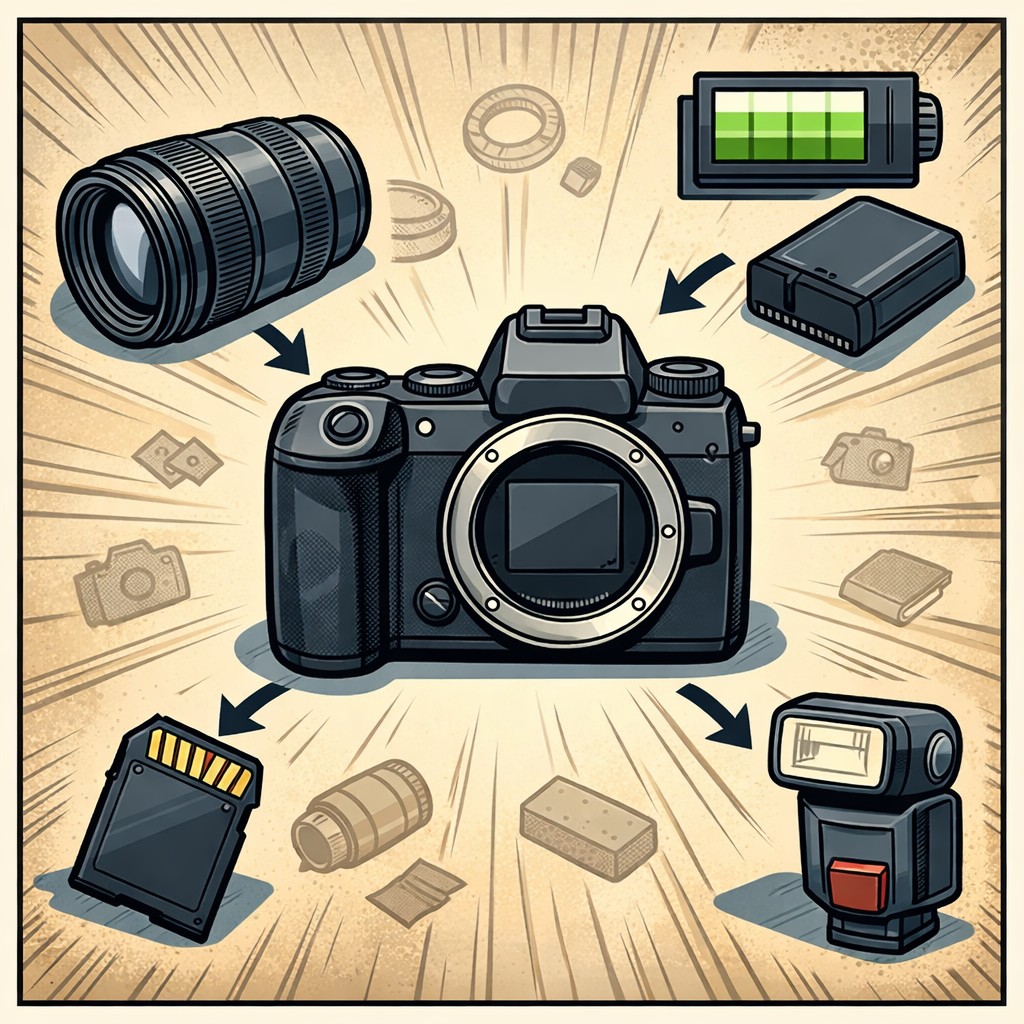
Your first camera purchase is a bigger decision than you might think. You’re not just buying a camera body—you’re choosing a system that will shape how you learn, what you buy next, and how you grow as a photographer.
If you’re early in the process of choosing your first camera, this article builds on a few earlier pieces in this series—specifically around setting a realistic camera budget and understanding the difference between DSLR and mirrorless systems.
The Camera Isn’t the Product
When you buy a camera, you’re not just buying a device—you’re entering an ecosystem.
Think about your first computer: PC or Mac? Or your first smartphone: iPhone or Android? The hardware matters, but what you’re really choosing is everything that comes with it: accessories, compatibility, upgrades, and how easy it is to live in that world.
This article isn’t about telling you which brand to buy. It’s about understanding the commitment you’re making—and what to consider before you commit.
What a Camera Ecosystem Really Is
A camera ecosystem is much more than a single body. Camera bodies come and go. Most photographers start with a beginner camera, then eventually upgrade to something more capable.
Lenses are different. They tend to stay with you, and they’re often the real long-term investment. They shape what you can shoot, how your images look, and how you develop your style.
Ecosystems also include the gear that quietly adds up over time: batteries, chargers, grips, flashes, and other accessories that are often brand-specific.
Another important factor is how open the ecosystem is. Can you buy high-quality third-party lenses and accessories, or are you mostly limited to one manufacturer’s lineup?
And finally, ecosystems aren’t just about gear and specs—they’re about experience: what feels intuitive, what feels frustrating, and what keeps you excited to keep shooting.
Why This Matters More than Specs
Once you’re inside an ecosystem, upgrading a camera body is usually manageable. Switching ecosystems is not.
Lenses, batteries, and accessories don’t always carry over between brands. If you switch systems, you may be replacing far more than just a camera body—and that can be expensive.
There’s also the human side of this that beginners often overlook: support.
Do you have photographer friends (or fellow beginners) you might shoot with? Buying into the same ecosystem makes it easier to get help from someone who already knows the gear. You may even get the chance to try a lens before buying one, or borrow equipment for a weekend. That kind of shared learning reduces friction and speeds up progress.
This is something I see often in beginner workshops and informal photo walks: learning is easier when the tools feel familiar and support is close at hand.
Familiarity matters too. Have you used any camera brands before? Did one feel intuitive in your hands or easy to navigate in the menus? Especially early on, comfort and ease of use often matters more than small differences on a spec sheet.
For me, Canon has been the ecosystem I’ve spent the most time inside—not because it’s objectively better, but because it’s the system I learned on and feel most at home using.
I started with a simple Canon PowerShot point-and-shoot, then moved to a Canon T3i, which was my first DSLR. At that stage, I was learning the basics and only ever used the kit lens that came with it. Life eventually got busy, photography took a back seat, and I sold that gear, and just used my smartphone camera for a while.
When I returned to photography more seriously years later, I was essentially starting over—but I chose to stay within the Canon ecosystem and moved into mirrorless, first with the RP and later with the R5.
What mattered this time wasn’t carrying old gear forward, but continuity going forward. As I invested in lenses and accessories again, they worked across bodies within the same system. Each upgrade felt like an evolution rather than a reset, which allowed me to focus more on learning and shooting instead of re-learning my tools.
I’m fully aware that photographers in other ecosystems have this same experience with their chosen systems. The lesson isn’t about Canon specifically—it’s about the value of committing to a system that feels right and growing within it over time.
But, for some factual data as to what brands are the most popular we can look at this report by Digital Camera Life, of the top five digital camera manufacturers:
Canon - 4.5 million units shipped in 2025 (45.7% market share)
Sony - 2.42 million units shipped in 2025 (24.6% market share)
Fujifilm - 1.16 million units shipped in 2025 (11.8% market share)
Nikon - 880,000 units shipped in 2025 (8.9%market share)
Panasonic - 430,000 units in 2025 (4.4% market share)
A Better Way to Choose
Instead of asking, “What camera should I buy?” consider asking:
What do I enjoy photographing most?
What lenses might I want in a few years?
Who might I learn from or shoot alongside?
Which system feels intuitive enough that I’ll actually want to use it?
There’s no perfect brand. Every system has strengths and tradeoffs, and what’s a “pro” for one photographer may be a “con” for another. The goal isn’t to pick the best ecosystem—it’s to pick one that fits how you want to learn, shoot, and grow.
In an upcoming article, I’ll take a closer look at buying new versus pre-owned gear, and how that decision fits into the bigger picture.
This article is part of my Beginner Photographer’s Buying Guide series.