New or Pre-Owned? A Thoughtful Starting Point for Beginners
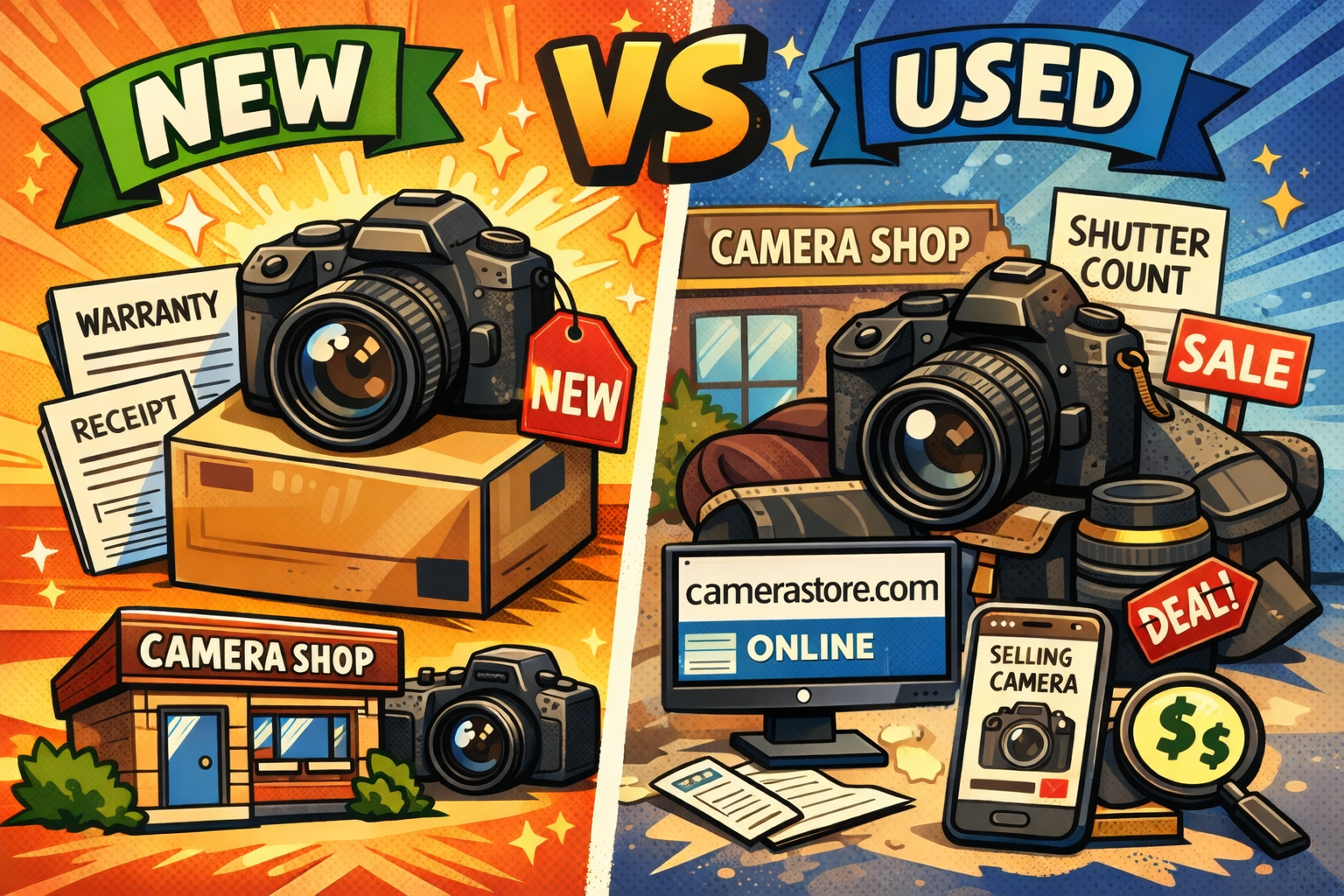
Buying your first camera can feel less like a purchase and more like a test. Not because the decision is especially technical, but because it carries emotional weight. After thinking through systems, long-term fit, and comfort — ideas explored in the earlier article Buying a Camera Is Buying an Ecosystem — most beginners arrive at their first real fork in the road:
Should I buy new, or should I buy used?
This question comes up early for a reason, and it’s not just a beginner problem. Photographers at every level face it again and again. This article isn’t here to tell you the “best” answer. Instead, it’s meant to help you feel more comfortable with whichever starting point you choose — so you can spend less time second-guessing and more time actually taking photos.
If you’ve already made your purchase, here’s a place to land before moving forward.
Why This Question Comes Up So Early
Throughout the first-time camera buying process, this is often the first real decision point that feels consequential. Many beginners feel pressure to make the “right” choice, as if one path signals competence and the other signals a mistake.
That pressure is understandable — and unnecessary.
This decision is a normal one. It’s not a sign of confusion or inexperience. It’s simply the moment where learning intersects with uncertainty. The second-hand camera market is full of excellent options for beginners and professionals alike, just as new gear continues to serve photographers at every stage. The goal here isn’t optimization. It’s confidence.
What Buying New Solves (and What It Doesn’t)
Buying new can remove anxiety for some people. New purchases often come with warranties, clear return policies, and the quiet reassurance that no one else has handled the camera before you. That predictability can take some of the stress out of an already unfamiliar process.
There’s nothing wrong with valuing that.
At the same time, buying new doesn’t guarantee better photos. The quality of your images isn’t determined by whether the camera was recently unboxed. It’s shaped by the photographer using it. Skilled photographers make strong images with a wide range of tools — new and used alike.
Buying new also doesn’t remove the learning curve. A camera is a tool, and learning photography means learning how to use your tools thoughtfully. That work exists regardless of when or how the camera entered your hands.
Seen this way, buying new isn’t about image quality or seriousness. It’s about reducing uncertainty at the beginning — and for some people, that’s exactly what helps them get started.
Buying Preowned: What Actually Matters
The used camera market can feel intimidating at first, especially if you don’t yet trust your own judgment. But it helps to remember that cameras are durable tools. Used does not automatically mean worn out.
When purchasing pre-owned equipment, a few indicators can help provide context without requiring deep technical knowledge:
Condition descriptions
Most reputable resellers use grading systems to describe the cosmetic and functional condition of used gear. These descriptions aren’t about perfection — they’re about transparency.
Shutter count
Digital cameras have mechanical shutters rated for a certain number of actuations. This number provides context, not a prediction of failure. Pro-level cameras typically have higher rated lifespans, but even enthusiast-level cameras are designed for extensive use. In peer-to-peer marketplaces, shutter count may or may not be listed, and that alone doesn’t make a camera a bad option.
Where you buy from often matters more than the age of the camera itself.
Local camera shops frequently sell pre-owned gear that’s been inspected and cleaned, sometimes offering short return windows. Established online retailers such as B&H Photo Video and KEH Camera also sell used equipment alongside new, often with clear condition ratings and satisfaction periods.
Many manufacturers sell refurbished or gently used returns as well, sometimes with warranties similar to new purchases. Peer-to-peer marketplaces can occasionally surface complete starter kits or lightly used equipment, though patience and caution are important. Pawn shops can be viable too, depending on the shop and your comfort level — experiences there vary widely.
Buying pre-owned isn’t about chasing deals or being clever. For many beginners, it’s about flexibility: entering an ecosystem with lower upfront commitment while they’re still discovering what they enjoy shooting.
Buying Used Lenses
Whether you bought your camera body new or used — and whether you’re early in your photography journey or further along — used lenses are often an excellent option. Lenses tend to hold their value well, perform consistently over time, and can be a smart way to stretch your budget.
When buying used lenses, it’s worth paying attention to their internal condition, particularly fungus and excessive dust.
Lens fungus is a type of growth that can develop inside a lens when it’s stored for long periods in warm, humid environments. In mild cases it may not noticeably affect image quality, but more advanced fungus can permanently damage lens coatings and internal elements.
Dust inside a lens is much more common and, in small amounts, usually isn’t a concern. A few dust particles are unlikely to have any visible impact on your images and are normal in many used lenses.
However, large amounts of dust, haze, or obvious internal debris can reduce contrast and image clarity — and should be approached more cautiously.
When buying used lenses, it’s reasonable to:
Ask whether the lens has any signs of fungus, haze, or excessive internal dust
Look closely at product photos for cloudiness or unusual internal patterns
Favor sellers who clearly describe condition and offer returns or inspection periods
As a general rule, lenses that have been well cared for and stored in normal household conditions are unlikely to develop fungus or problematic dust. Buying from reputable camera shops goes a long way toward avoiding these issues.
Framing the Decision: Risk Tolerance, Not Smartness
For some people, buying a brand-new camera feels exciting and motivating. For others, it feels stressful — like something too precious to risk damaging. In the same way, buying used can feel freeing to some, but distracting to others who worry that every shutter click might be the camera’s last.
Neither reaction is wrong.
There are good reasons to buy your first camera new. There are good reasons to buy it pre-owned. The difference usually comes down to personal comfort with uncertainty, not intelligence, seriousness, or commitment.
It can help to pause and ask:
Does this choice make me feel calm, or does it add stress?
Does it make me want to go take photos?
Starting imperfectly is expected. As you begin shooting, you’ll learn what you enjoy, what frustrates you, and what matters to you — and those discoveries may eventually shape future choices. Confidence doesn’t come from buying the “right” camera. It comes from using the one you have.
In the next article, we’ll pause on something many people don’t realize is even part of the camera decision at first: sensor size. We’ll talk about what it means, why you’ll start seeing it mentioned, and how to think about full-frame and APS-C cameras without turning it into a hierarchy.
This article is part of my Beginner Photographer’s Buying Guide series.