DSLR vs Mirrorless: What first time camera buyers should know
This is one of the most common questions I hear from beginner photographers: should I buy a DSLR or a mirrorless camera?
If you haven’t already, I recommend starting with the first article in this series, where I walk through how to build a comfortable budget for your first camera purchase.
In this article, I’ll explain the differences between DSLR and mirrorless cameras — not just the technical ones, but the practical considerations I also cover in my Intro to Photography workshops. Both systems are excellent tools for learning photography, and the goal here is to help you understand which one fits you best.
What is a DSLR Camera?
DSLR, or Digital Single-Lens Reflex, cameras have been around for decades. When photography transitioned from film to digital, the image sensor simply replaced the film — and the DSLR was born.
While most manufacturers are no longer developing new DSLR models, the second-hand market is full of excellent options. Many professional- and enthusiast-level DSLR cameras are now available at beginner-friendly prices, making them a great way to learn photography without overspending.
DSLR Features:
Interchangeable lenses
High quality image sensor
Optical Viewfinder
Mirror in front of the digital sensor that pivots out of the way of the digital sensor when the shutter button is pressed
Let’s take a closer look at a DSLR Camera!
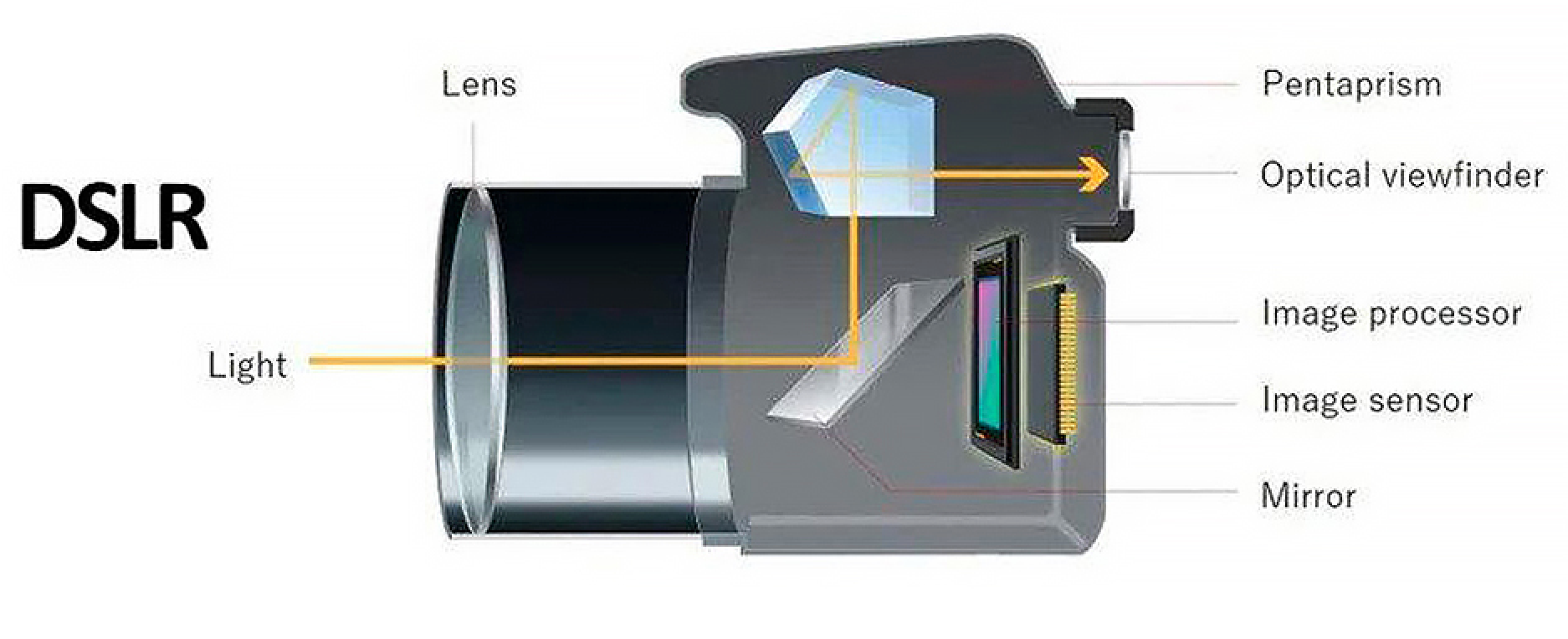
DSLR Cutaway
In the image above we can see a cutaway of a DSLR camera. As you can see, light enters the lens and then bounces off a mirror and up into a pentaprism. This is where you see the image you are looking at through the viewfinder on the back of the camera.
When you press the shutter release button, the mirror in front of the camera’s sensor pivots out of the way, exposing the light to the sensor, and the image is captured.
The more recent DSLRs have very capable image sensors that, again, are perfect for beginners and professionals alike.
What is a Mirrorless camera?
Point blank, a mirrorless camera does not have the mirror mechanism found in DSLRs.
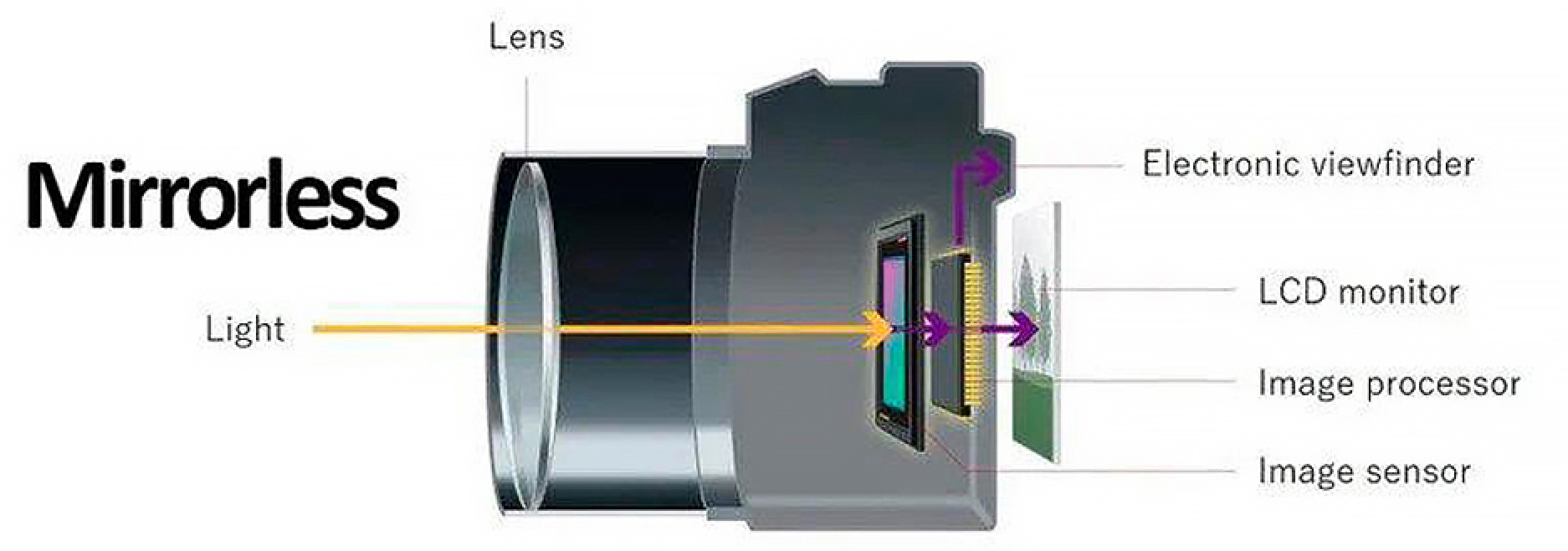
Mirrorless Camera Cutaway image
In a mirrorless camera system the light enters the lens and is exposed directly to image sensor. The image is then displayed on a LCD monitor on the back of the camera, as well as an Electronic View Finder.
Mirrorless camera features:
Interchangeable lenses
Modern high quality image sensor
Electronic Viewfinder
No mirror mechanism
Faster auto focusing systems (some include AI)
So, Mirrorless is better than DSLR, right?
At first glance, it may seem like one system is clearly better than the other. In reality, both DSLR and mirrorless cameras have strengths and trade-offs. For learning photography, either platform is an excellent choice.
Let’s look at a few key factors:
Image sensor quality - From a beginners perspective they are equal. You can get beautiful images form both a DSLR and a Mirrorless camera. The differences would be extremely hard to tell, while the price wouldn’t be.
Ease of Use - Both platforms are very easy to use, once you learn them.
Size and Weight - While there weight differences between the two they are generally not significant.
Autofocus - As with all things new a certain level of performance improvement is expected. Newer generation (as in the newest professional mirrorless cameras) can include AI built-in to help with subject detection and tracking. However, DSLR and mirrorless alike have fantastic autofocus, especially for someone just beginning to learn photography.
Electronic View Finder (EVF) vs Optical - Mirrorless cameras provide an Electronic View Finder, or EVF. Since this is a tiny LCD they can overlay information on top of the image to help you compose shots and view exposure settings. With DSLR this same information can be made available long the border of the images, rather than an overlay.
Battery life - Battery life on DSLRs tends to be a little bit longer than mirrorless, because it’s not powering more circuits that are contained in a mirrorless system. DSLRs often get better battery life per charge, while mirrorless users typically carry extra batteries — which largely balances things out in practice.
For a beginner, both DSLRs and Mirrorless cameras are great options. It just happens to be that Mirrorless is where manufacturers are investing in today.
The Second-Hand Market Reality
Today, the second market is flooded with a plethora of options for both DSLR and Mirrorless cameras. Mirrorless cameras are on their 2nd and 3rd generations, so plenty of first generation mirrorless bodies and lenses are on the market, in addition to the DSLRs.
Plenty of pro-photographers are now selling their DSLR gear and investing in the latest mirrorless cameras. You can get enthusiast and professional quality cameras at really great prices!
You can find pre-owned inventory at most local camera shops and online retailers, like B&H Photo and Video. Platforms like Facebook Marketplace can also be a good place to find complete photography kits — just be sure to check seller ratings and ask questions.
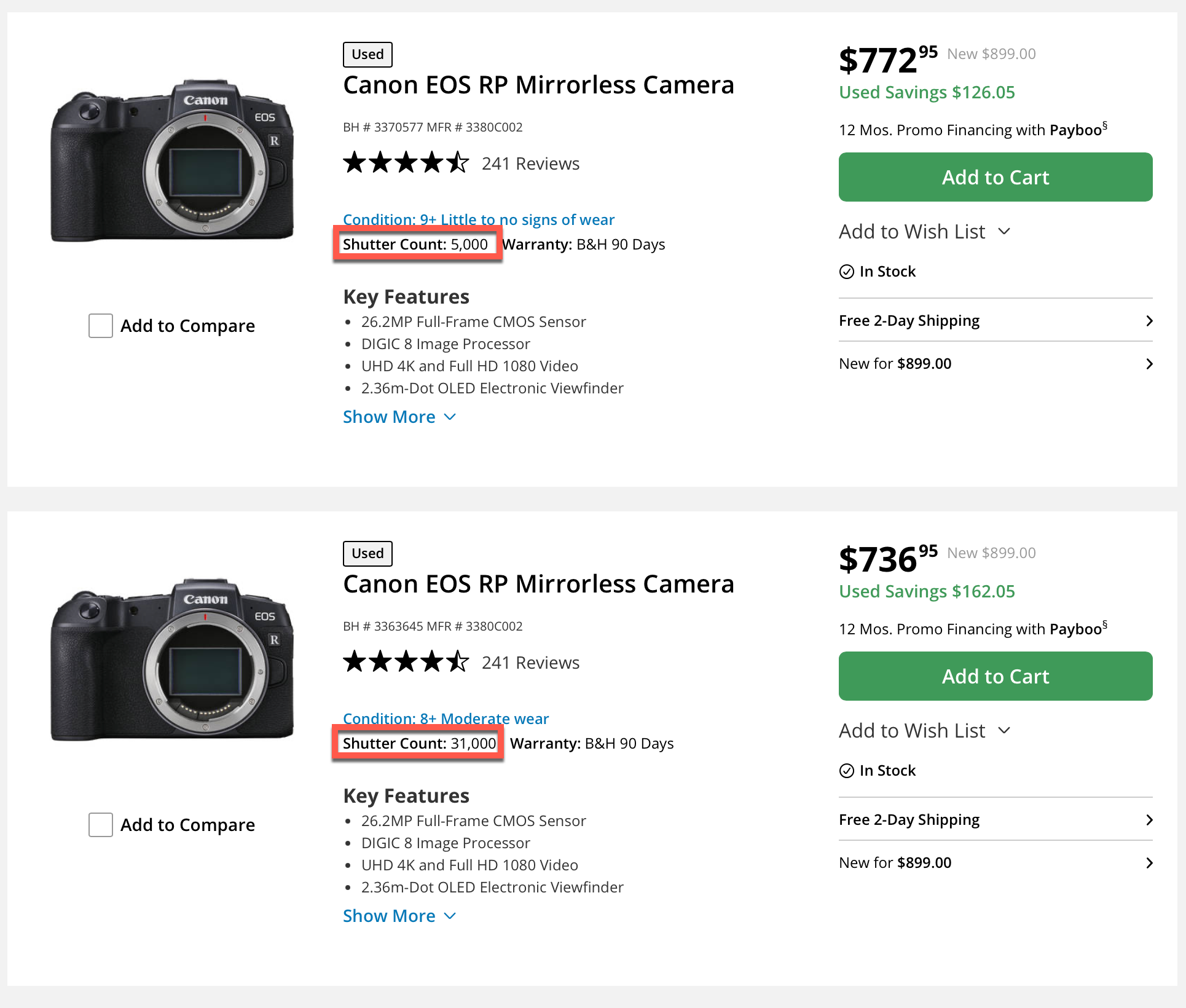
The biggest thing to be concerned about when buying a pre-owned camera is the shutter count. It varies by model but every shutter has an expected viable lifetime. The shutter count can be read off from the camera to determine how much of the useful shutter life has been consumed. The lower the shutter count for the given cameras system the more valuable it may be considered. You may commonly see this listed on various websites. You should also inquire about it in any private sales you do.
This screenshot shows multiple Canon RPs for sale on B&H’s used gear website, and shows the approximate shutter wear of each unit.
Bottom line, with used gear you’l be able to stretch your budget further. Buying new gets you piece of mind as you can attach a warranty at time of purchase.
Which should you buy as a beginner?
Well, both are very viable options for a beginner photographers so it really comes down to your budget and your buying personality?
Do you value future-proofing?
Are you budget-conscious?
Do you prefer buying new?
If you think you’re going to be into photography for the long haul then future proofing your investment might now be a bad idea. Consider mirrorless.
If you’re doing this just as a hobby, or are trying it out, and don’t mind investing in upgrades later, if you stick with it, consider DSLR.
The Next Decision Point
After deciding which camera system fits you and your budget best, the next decision point is sensor size.
This article is part of my Beginner Photographer’s Buying Guide series.